Demystifying Digital Marketing Courses: What You Need to Know
Understanding Digital Marketing
Digital marketing refers to the strategies and techniques utilized to promote products or services through digital channels, primarily on the internet. As a dynamic and rapidly evolving field, it encompasses a wide array of components, including social media marketing, search engine optimization (SEO), email marketing, content marketing, and pay-per-click advertising, among others. The significance of digital marketing in the contemporary business landscape cannot be overstated; it serves as a vital conduit connecting businesses with their target audiences. With the increasing reliance on technology and the internet in daily life, the importance of understanding digital marketing continues to rise.
As we approach 2025, the landscape of digital marketing is likely to undergo transformative changes driven by advancements in technology and shifts in consumer behavior. Emerging trends such as artificial intelligence (AI), machine learning, and data analytics are shaping the future of digital marketing, allowing businesses to develop more personalized and effective marketing strategies. This evolution emphasizes the necessity for both businesses and individuals to acquire a solid understanding of digital marketing fundamentals to remain competitive in an increasingly digital world.
The advent of social media platforms has revolutionized how brands engage with consumers, making digital engagement pivotal for business success. Nowadays, consumers expect brands to be present and interactive online, which underscores the need for comprehensive digital marketing knowledge. Individuals entering the workforce or seeking to advance their careers must recognize the relevance of digital marketing skills, as employers increasingly prioritize candidates who can navigate this complex field proficiently.
In conclusion, the understanding of digital marketing is essential for individuals and businesses alike. As the digital landscape continues to evolve, it is imperative to stay informed about best practices and innovative strategies in order to effectively capitalize on opportunities for growth and engagement in the marketplace.
Core Topics Covered in Digital Marketing Courses
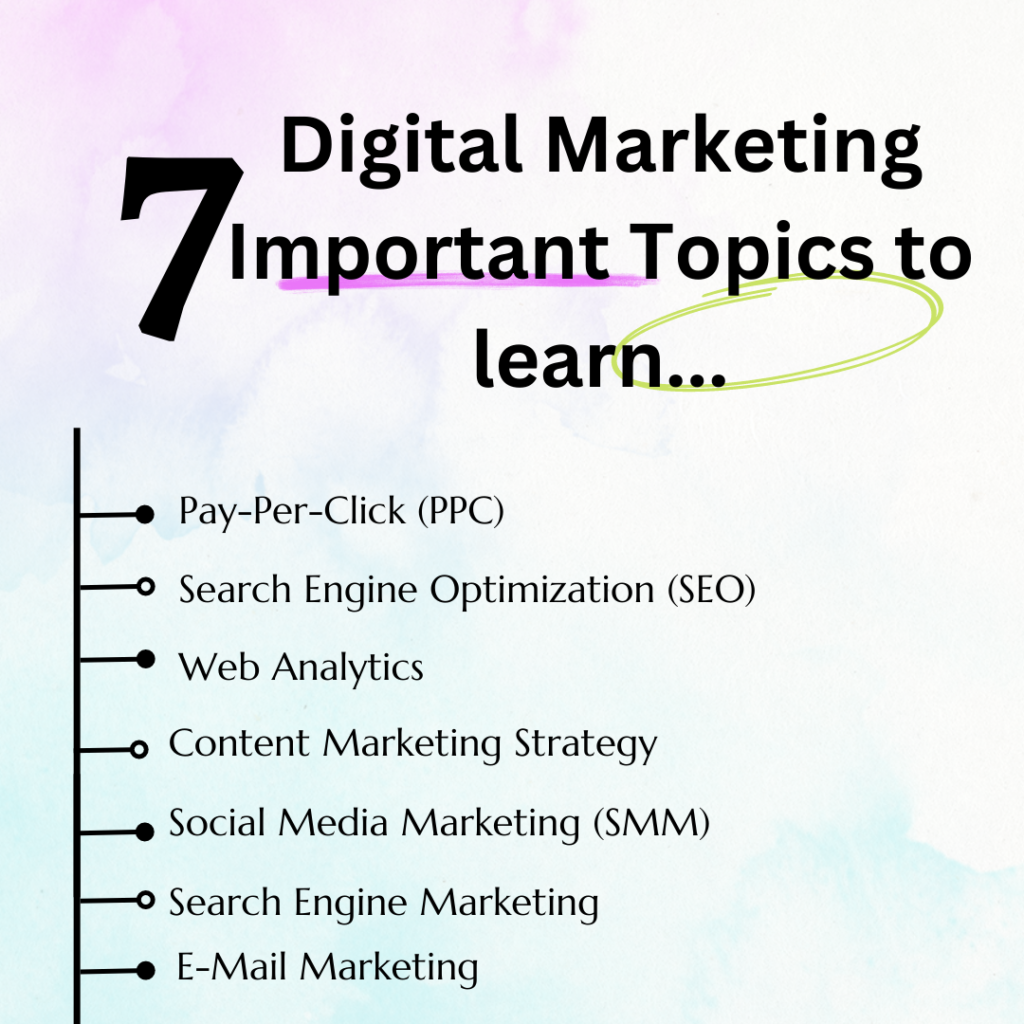
Digital marketing courses encompass a wide array of essential topics that equip individuals with the knowledge and skills necessary to navigate the contemporary marketing landscape. One of the foundational topics is Search Engine Optimization (SEO), which focuses on optimizing websites to improve their visibility on search engines. Mastery of SEO techniques is critical for driving organic traffic and enhancing a site’s ranking on platforms such as Google. This includes understanding keyword research, on-page and off-page optimization, as well as technical SEO aspects.
Another vital area is social media marketing. This topic emphasizes the strategic use of social media platforms like Facebook, Instagram, and LinkedIn to engage target audiences, build brand awareness, and drive conversions. Students learn how to create compelling content tailored to various social channels, analyze engagement metrics, and adapt their strategies accordingly for maximum impact.
Email marketing is equally significant, as it remains one of the most effective methods for reaching customers directly. Digital marketing courses teach participants how to design effective email campaigns, segment audiences, and analyze the performance of email initiatives to enhance engagement and improve conversion rates.
Content strategy is another core focus, demonstrating the importance of delivering valuable and relevant content to attract and retain a clearly defined audience. Effective content strategy not only aids in search engine visibility but also helps establish authority and trust within a specific niche.
Lastly, paid advertising, including Pay-Per-Click (PPC) campaigns on platforms such as Google Ads and social media ads, plays a crucial role in digital marketing. Courses typically cover techniques for creating compelling ads, managing budgets, and utilizing analytics to track and optimize paid campaigns. Understanding these core topics equips students with the skills necessary for success in the rapidly evolving field of digital marketing.
Free vs. Paid Digital Marketing Courses
In the evolving landscape of digital marketing education, aspiring marketers often face the choice between free and paid courses. Each option presents a unique set of advantages and disadvantages that can influence the learning experience and outcomes. Understanding these differences is crucial for anyone looking to enhance their skill set in digital marketing.
Free digital marketing courses offer an accessible entry point for those keen to explore the field without financial commitment. Platforms such as Google, HubSpot, and Coursera provide foundational knowledge on various aspects of digital marketing, including SEO, social media, and content marketing. These courses often come with no prerequisites and enable learners to proceed at their own pace. However, while they can offer valuable insights, free courses may lack depth and advanced content, which could limit understanding in more complex areas.
On the other hand, paid digital marketing courses typically come with a more structured curriculum, guided by industry experts. Enrolling in these courses may involve a significant financial investment, but this can result in a more comprehensive education. Paid courses often provide personalized feedback, interactive assignments, and networking opportunities with other marketing professionals. Additionally, they may grant certification that holds more weight in the job market compared to the certificates from free courses, thereby potentially enhancing career prospects.
However, it is essential to consider the risk of overspending on subpar courses. Not all paid courses deliver value, so thorough research and reviews should be undertaken before making a financial commitment. Ultimately, the choice between free and paid digital marketing courses hinges on individual learning preferences, financial considerations, and career goals. Both options can be beneficial, but an informed decision can lead to a more fruitful educational experience.
Choosing the Right Digital Marketing Course
In the ever-evolving landscape of digital marketing, selecting the appropriate course that aligns with one’s career aspirations is crucial. With numerous options available, aspiring marketers must approach the decision-making process systematically. Firstly, it is essential to assess the course content. A thorough examination of the syllabus will reveal whether it covers essential topics such as search engine optimization (SEO), social media marketing, content creation, and data analytics. Courses that offer hands-on projects and case studies can provide practical experience, which is invaluable for skill development.
Instructor qualifications play a significant role in determining the course’s effectiveness. It is beneficial to look for courses taught by industry professionals who possess both academic credentials and real-world experience. Instructors with a sound background in digital marketing can offer insights and applications of theoretical concepts, thereby enriching the learning experience. Additionally, researching the instructors’ previous students’ outcomes, such as job placements or advancements in their careers, can serve as an indicator of the course’s overall efficacy.
Conducting thorough research is imperative before enrolling in any digital marketing program. Prospective students should utilize online platforms to read reviews and testimonials from former attendees. Engaging with current students through forums or social media groups can also provide valuable perspectives. Furthermore, evaluating the flexibility of course delivery—whether it is offered online, in-person, or as a hybrid—can help align with one’s lifestyle and learning preferences. Comparing various courses based on these criteria can lead to more informed decisions, ultimately setting individuals on a path toward success in the digital marketing field.
Certifications and Accreditation in Digital Marketing
In the rapidly evolving landscape of digital marketing, certifications and accreditations serve as vital benchmarks of expertise and credibility. For individuals aspiring to establish or advance their careers in this field, obtaining recognized certifications can significantly enhance their professional profiles. These credentials not only demonstrate a commitment to continuous learning but also indicate a standardized level of knowledge in digital marketing practices.
Several well-regarded certifications stand out in the digital marketing industry. Among the most prominent are the Google Ads and Google Analytics certifications, which equip individuals with the skills necessary to effectively manage online advertising campaigns and analyze web data. Certifications from HubSpot, particularly in inbound marketing, are also highly valued as they emphasize content marketing strategies and customer engagement techniques. Additionally, the Digital Marketing Institute (DMI) provides various certification pathways, including the Professional Diploma in Digital Marketing, which covers a comprehensive curriculum that is often sought by employers.
Having these certifications can dramatically increase employability, as they provide tangible proof of an applicant’s expertise and commitment to the field. Employers often favor candidates with recognized certifications, as they are viewed as more likely to have up-to-date knowledge and practical skills. Furthermore, these credentials can lead to greater job opportunities and potentially higher salaries, as companies increasingly seek professionals who can navigate the complexities of digital marketing. As such, investing time in obtaining relevant certifications is not only beneficial for personal growth but also for enhancing career prospects in a competitive job market.
Platforms Offering Digital Marketing Courses
The landscape of digital marketing education has evolved significantly in recent years, giving rise to various platforms that cater to diverse learning preferences and needs. Traditional universities and online educational platforms now provide a wealth of opportunities for aspiring marketers to enhance their skills. Among the top contenders, platforms such as Coursera and edX stand out by offering courses created in partnership with renowned institutions like Stanford University and Harvard. These platforms deliver a comprehensive curriculum that administers the essential concepts of digital marketing, ranging from SEO to social media strategies.
Additionally, specialized online learning websites like Udemy and Skillshare have surged in popularity due to their accessible and diverse course offerings. These platforms allow learners to select courses suited to their pace and skill level, often accommodating both beginners and seasoned marketers. Many of these courses are available at competitive prices, with frequent discounts making them even more appealing.
For those seeking a more structured learning path, bootcamps such as General Assembly provide immersive experiences centered on digital marketing. These education programs are designed to equip participants with practical skills through hands-on projects and real-world applications, making them highly valued by employers. Moreover, universities have also begun to recognize the value of online education by offering their own digital marketing certificates and degree programs, establishing strong credibility in the field.
In summary, a broad spectrum of platforms provides digital marketing courses aimed at accommodating different learning styles and schedules. From traditional universities to flexible online learning sites and immersive bootcamps, learners have myriad options to choose from, enabling them to gain invaluable knowledge in the dynamic field of digital marketing.
Career Opportunities After Completing a Course
Digital marketing courses equip individuals with the necessary skills and knowledge to pursue various career opportunities in the ever-evolving online landscape. Completing such a course opens doors to a multitude of roles, each with specific responsibilities and areas of focus. One prominent position is that of a Digital Marketing Specialist. In this role, individuals are responsible for developing comprehensive digital strategies, managing online campaigns, and analyzing performance metrics to drive engagement and conversions.
Another key career path is that of an SEO Analyst. This position focuses on optimizing website content and structure to improve search engine rankings. SEO analysts conduct keyword research, analyze competitors, and monitor site performance, ensuring that organizations can attract organic traffic effectively.
A third notable option is to become a Social Media Manager. In this capacity, professionals create and manage social media content, engage with audiences across various platforms, and develop strategies to enhance brand visibility and interaction. Social media managers must stay abreast of trends and algorithm changes to effectively leverage these channels for brand promotion.
Additionally, opportunities exist for Content Marketing Managers, who develop strategic content plans that align with the broader marketing goals of the organization. They oversee content creation, distribution, and performance analysis to ensure that the messaging resonates with the target audience.
Moreover, roles such as Email Marketing Specialists focus on crafting targeted email campaigns aimed at fostering customer relationships and retention. These specialists design, implement, and analyze email marketing strategies that align with organizational goals.
Clearly, completing a digital marketing course lays a foundational skill set that can lead to diverse career paths. Each role contributes to the overall success of businesses in the digital space, highlighting the importance of skilled professionals in today’s marketing landscape.
Success Stories from Digital Marketing Course Graduates
As the landscape of the job market continues to evolve, an increasing number of individuals are turning to digital marketing courses for personal and professional development. These courses have not only equipped students with critical skills but also paved the way for numerous success stories that highlight the transformative impact of digital marketing education.
One such graduate, Sarah Thompson, transitioned from a retail background to becoming a content marketing specialist after completing an online digital marketing course. Initially apprehensive about changing careers, Sarah’s course provided her with both theoretical knowledge and practical skills, transforming her approach to digital content creation. Post-graduation, she landed a role at a leading marketing agency where she now develops successful campaigns for various clients. Her story exemplifies how targeted education can facilitate significant career shifts and personal growth.
Similarly, Michael Chen, who previously worked in IT, found his passion for digital marketing through a structured curriculum covering SEO, social media strategies, and data analytics. Upon completion, he leveraged his newfound expertise to launch his own digital marketing consultancy. Michael notes that the combination of coursework and hands-on projects was instrumental in building his confidence and understanding of client needs in a software-driven landscape. His successful venture serves as an inspiring testament to the effectiveness of digital marketing courses in fostering entrepreneurship.
These examples illustrate the practical impact of pursuing digital marketing education. Graduates not only acquire valuable skill sets, but they also gain a new perspective on their careers and personal ambitions. Many alumni take to social media and forums to share their experiences, highlighting how these courses can lead to networking opportunities, mentorship, and continuous learning. The success stories of course graduates underscore the importance of investing in digital marketing education to achieve career success and growth in an increasingly competitive job market.
Staying Ahead in Digital Marketing
In the rapidly evolving realm of digital marketing, the importance of continuous learning and adaptation cannot be overstated. The digital landscape is characterized by constant changes, from new algorithms introduced by search engines to the emergence of innovative social media platforms. To maintain a competitive edge, marketers must prioritize ongoing education to stay informed about industry trends and advancements.
One effective way to foster continuous learning is by enrolling in digital marketing courses. These courses often cover the latest tools, strategies, and best practices, ensuring that marketers are well-equipped to handle contemporary challenges. Additionally, many online learning platforms offer timely updates on emerging trends, allowing professionals to learn at their own pace while ensuring their knowledge remains relevant.
Another vital approach is to follow industry leaders and organizations on various social media platforms. Engaging with thought leaders through webinars, podcasts, and blogs can provide insights into future trends and innovative strategies. Participating actively in professional groups on LinkedIn or joining forums dedicated to digital marketing discussions also fosters an environment of shared learning where practitioners can exchange ideas and experiences.
Moreover, it is beneficial to attend digital marketing conferences and workshops. These events not only offer valuable networking opportunities but also feature sessions led by industry experts, showcasing the latest technologies and successful case studies. By attending these gatherings, marketers can glean insights that might not yet be covered in conventional courses.
Lastly, applying what one learns in real-time projects is crucial. By experimenting with new strategies and tools, marketers can develop a hands-on understanding of their effectiveness, ensuring they remain agile and adaptable in this ever-changing field. The key to thriving in digital marketing lies in the relentless pursuit of knowledge and the willingness to embrace change.